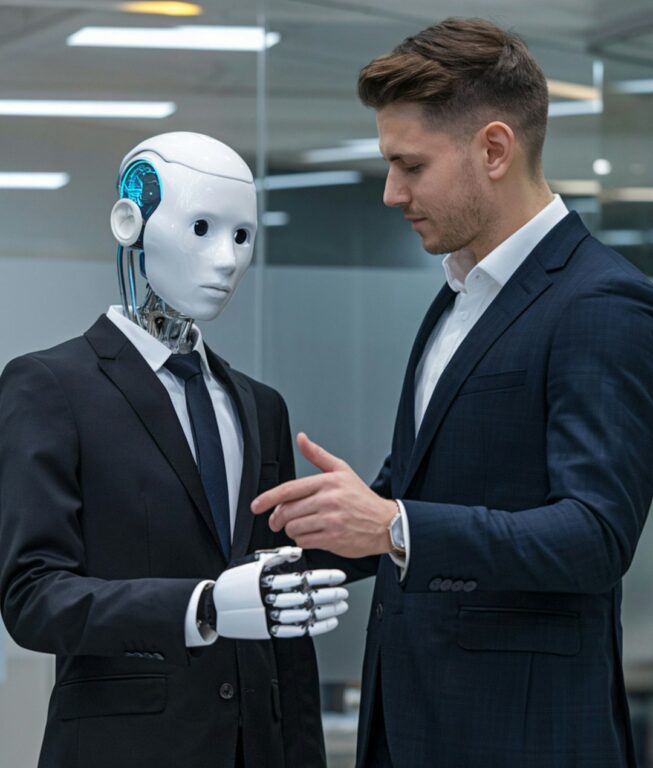
The digital age has introduced humanity to a force that is rapidly redefining our world. Artificial Intelligence, often simply called AI, is not just a technological marvel; it is fundamentally shaping the future of human progress across every conceivable domain. From optimizing daily routines to pioneering breakthroughs in science and medicine, AI’s pervasive influence is undeniable. This powerful technology is no longer a concept confined to science fiction but a present reality, actively transforming industries, societies, and individual lives at an unprecedented pace.
Table of Contents
The Transformative Power of AI in Everyday Life
Imagine a world where your daily tasks are streamlined, decisions are data-driven, and personal experiences are seamlessly tailored to your needs. This is the reality AI is crafting. From the intelligent assistants on our smartphones that answer questions and manage schedules to the personalized recommendations that guide our online shopping and entertainment choices, AI is deeply embedded in our everyday existence.
These intelligent systems learn from our behaviors and preferences, offering unparalleled convenience and efficiency. Smart home devices, for instance, use AI to optimize energy consumption and enhance security, making our living spaces more responsive and intuitive. This pervasive integration highlights how AI is not just a tool but a silent partner, continuously working to improve our quality of life and redefine our expectations of convenience.
Revolutionizing Industries with Intelligent Automation
Beyond personal convenience, Artificial Intelligence is a catalyst for profound change across global industries. In healthcare, AI-powered diagnostics can detect diseases earlier and with greater accuracy, while machine learning accelerates drug discovery and personalized treatment plans. This medical intelligence is saving lives and pushing the boundaries of what’s possible in patient care.
Manufacturing sectors are embracing AI for predictive maintenance, optimizing production lines, and enhancing quality control through robotic automation. This leads to reduced downtime and increased productivity, significantly boosting global supply chains. Financial institutions leverage AI for sophisticated fraud detection, algorithmic trading, and personalized financial advice, safeguarding assets and creating new investment opportunities. Even agriculture benefits from precision farming techniques, where AI analyzes data on soil, weather, and crop health to maximize yields and minimize waste, ensuring food security for a growing global population. These examples underscore AI’s role in driving unprecedented efficiency and innovation across diverse economic landscapes.
Ethical Considerations and the Path Forward for Responsible AI
As Artificial Intelligence expands its reach, it naturally brings forth crucial ethical considerations that demand our attention. Concerns about job displacement, algorithmic bias, and data privacy are legitimate and require thoughtful solutions. Ensuring fairness and transparency in AI systems is paramount to building public trust and preventing unintended societal harm.
Developing robust regulatory frameworks and ethical guidelines is essential for the responsible deployment of AI, ensuring that its benefits are widely distributed and potential harms are mitigated. This involves not only technical safeguards but also a commitment to human oversight, ensuring that AI remains a tool to augment human capabilities rather than diminish them. Proactive engagement from governments, industry leaders, and civil society is necessary to navigate these challenges effectively and steer AI development towards beneficial outcomes for all, fostering an inclusive AI future.
Fostering Human-AI Collaboration for Enhanced Capabilities
The narrative of AI replacing human jobs often overshadows its immense potential for collaboration. Instead of viewing AI as a competitor, we should embrace it as a powerful partner that augments human intelligence and creativity. AI can handle repetitive, data-intensive tasks, freeing up human professionals to focus on strategic thinking, complex problem-solving, and innovative pursuits.
Doctors can use AI to analyze vast medical datasets for quicker diagnoses and more effective treatment planning, architects can leverage AI for generative design solutions that optimize space and materials, and artists can explore new creative frontiers with AI-powered tools that expand their imaginative scope. This synergy, where humans provide intuition, empathy, and ethical judgment, while AI offers computational power and analytical precision, unlocks unprecedented levels of productivity and innovation across all fields, fostering a symbiotic relationship.
The Role of Education in an AI-Driven World
Preparing for a future increasingly shaped by Artificial Intelligence requires a proactive approach to education and skill development. Traditional learning models must evolve to equip individuals with the competencies needed to thrive alongside intelligent systems. This includes fostering critical thinking, digital literacy, data analysis skills, and an understanding of AI ethics, preparing individuals not just to use AI but to shape its development.
Beyond technical prowess, ‘human’ skills like creativity, emotional intelligence, communication, and adaptability will become even more valuable, distinguishing human contributions in an automated world. Lifelong learning initiatives and accessible training programs are crucial to ensure that workforces can continuously upskill and reskill, adapting to new roles and opportunities created by AI advancements and ensuring no one is left behind. Investing in human capital is investing in the future of human progress itself.
Navigating the Future: AI’s Promise and Potential
The journey with Artificial Intelligence is only just beginning, and its promise for solving some of humanity’s most pressing challenges is immense. From accelerating scientific research to developing sustainable energy solutions and improving global healthcare access, AI offers powerful tools for positive change. Embracing this potential requires a balanced approach, combining technological enthusiasm with careful ethical consideration.
As we continue to integrate AI into the fabric of our societies, it is vital to foster an environment of continuous learning, open dialogue, and collaborative innovation. The future of human progress is intrinsically linked to how we choose to develop, deploy, and interact with these intelligent systems. By actively participating in shaping AI’s trajectory, we can ensure it serves as a force for good, empowering humanity to reach new heights of achievement and well-being for generations to come.